
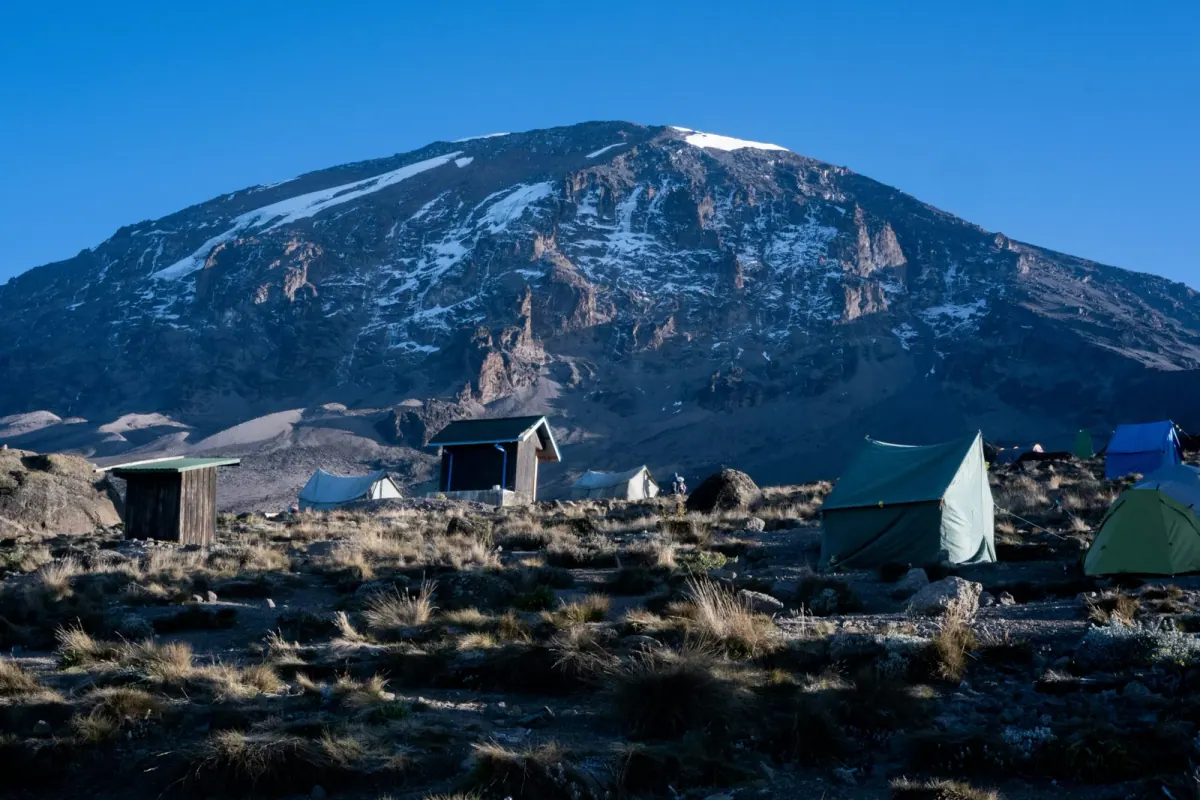
Mount Kilimanjaro
Tanzania
Mount Kilimanjaro is the highest mountain in Africa and the tallest free-standing mountain in the world. Trekkers climb through rainforest, moorland and alpine desert to reach the snow-capped summit at Uhuru Peak.
- Location
- Kilimanjaro Region, northern Tanzania
- Best time
- Jan to Mar, Jun to Oct
- Known for
- Africa's highest mountain
- Summit
- 5,895 m
Choose your route
Kilimanjaro climbing routes
Kilimanjaro has several climbing routes. They differ in length, scenery, crowds and how gradually you gain height. Pick the route that suits your fitness and time, and we will plan the climb around it.
Marangu route
The only route with sleeping huts. It climbs from the south-east and returns the same way, with a steady gradient. The shorter schedule leaves less time to adjust to altitude, so a 6 day plan is the better choice.
- Duration
- 5 to 6 days
- Stay
- Mountain huts
- Level
- Moderate
- Best for
- Trekkers who prefer a bed to a tent
Machame route
A scenic route from the south that crosses forest, moorland and the Barranco Wall. You climb high and sleep low on several days, which helps your body adjust. It is one of the most popular routes.
- Duration
- 6 to 7 days
- Stay
- Camping
- Level
- Challenging
- Best for
- Active trekkers who want varied scenery
Lemosho route
Starts on the quiet western side and joins the Machame route near the Shira plateau. The longer schedule and gradual gain in height give a good chance to adjust, and the first days are less crowded.
- Duration
- 7 to 8 days
- Stay
- Camping
- Level
- Challenging
- Best for
- First-time climbers who want more time to adjust
Rongai route
Approaches from the north near the Kenyan border, where the mountain is drier. The slopes are gentle and the trail is quieter, and you descend by the Marangu route.
- Duration
- 6 to 7 days
- Stay
- Camping
- Level
- Moderate
- Best for
- Climbers who want a quieter trail or travel in the wetter months
Northern Circuit route
The longest route. It circles the northern slopes before the summit climb, with the most time to adjust to altitude and long views over the plains.
- Duration
- 8 to 9 days
- Stay
- Camping
- Level
- Challenging
- Best for
- Climbers who want the longest, quietest route
Umbwe route
A steep, direct route from the south. It is the shortest way up and rises quickly, so it is only for experienced trekkers who are confident with altitude.
- Duration
- 5 to 6 days
- Stay
- Camping
- Level
- Very demanding
- Best for
- Experienced and very fit trekkers
History and Geology
Kilimanjaro is a dormant volcano made up of three volcanic cones: Kibo, Mawenzi and Shira. Kibo is the highest and holds the summit crater, with Uhuru Peak on its rim at 5,895 metres above sea level.
Diverse Ecosystems
A climb crosses several climate zones in a few days: cultivated farmland at the base, montane rainforest, heath and moorland, alpine desert and finally the arctic summit zone. Temperatures change from warm and humid to well below freezing.
Wildlife & Animals
Wildlife is mostly seen on the lower slopes. Blue monkeys and black-and-white colobus monkeys live in the rainforest, and antelope and other mammals are occasionally seen. Higher up, the landscape is too harsh for most animals.
Best Time To Climb
The two main climbing seasons are January to March and June to October, when skies are clearer and trails are drier. April, May and November are the rainy months, with wetter paths and more cloud.
Travel Tips
Altitude is the main challenge. Choose a route with enough days for acclimatisation, walk slowly and drink plenty of water. Good boots, warm layers and a rain jacket are essential, and a licensed guide is required in the park.
Getting There
Most climbs start from Moshi or Arusha. Kilimanjaro International Airport is about an hour from Moshi, so you can arrive, rest and start the climb within a day or two.
Photos
Plan your Mount Kilimanjaro safari
Tell us what you have in mind and we will plan the rest.